Start here
Judgement
The manager looks at one evaluation area and slides the bead to where they honestly believe their setting sits. Not against a target. Not for an audience. Just an honest first position on the five-point scale.
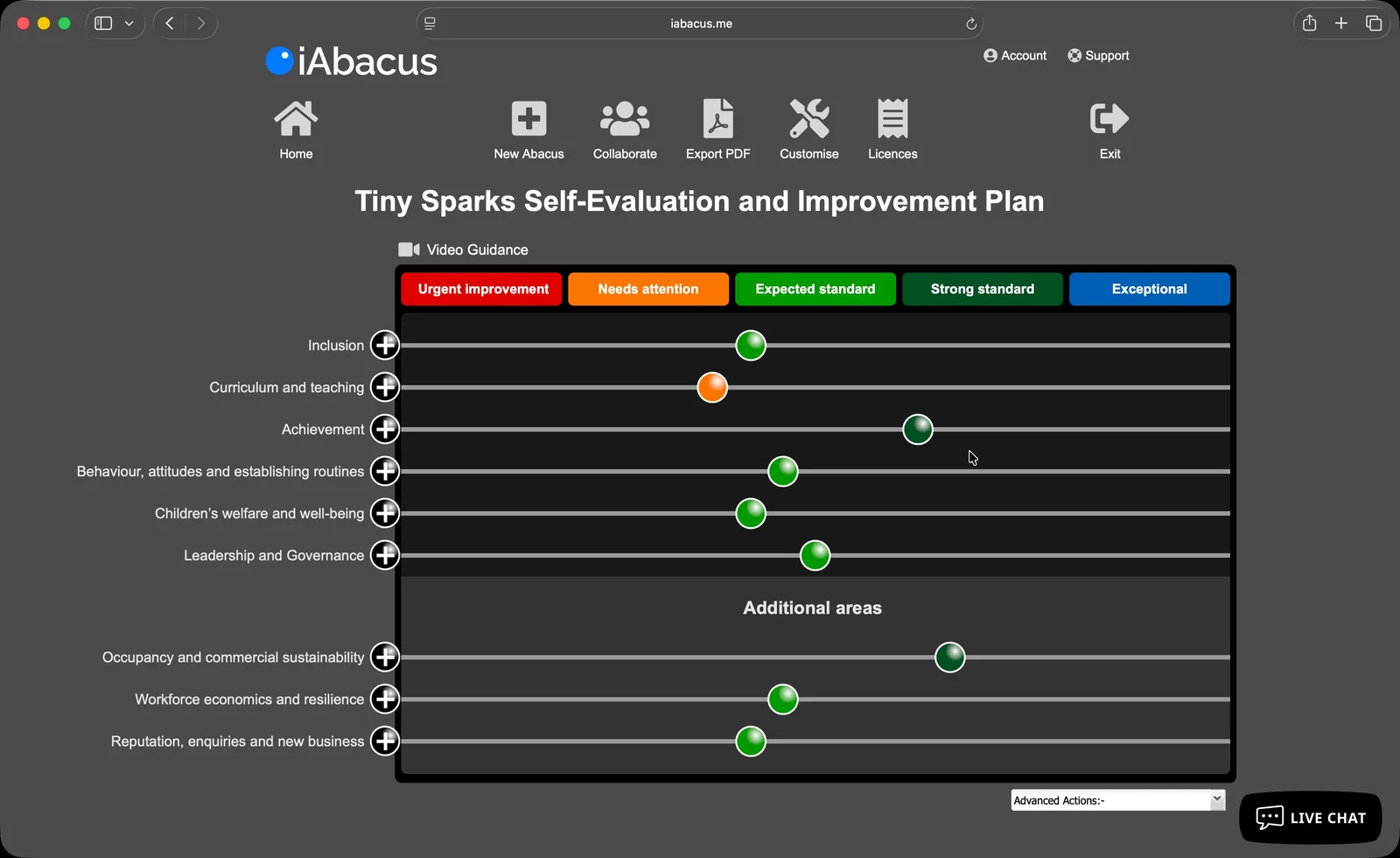
The Nursery Group Dashboard gives every setting in your group a structured, Ofsted-aligned self-evaluation and improvement plan — and gives you a live, group-wide dashboard showing exactly where every setting stands. Ofsted quality, plus the commercial and operational measures that matter to your group.
Know your group. Really know it.

Watch the Overview
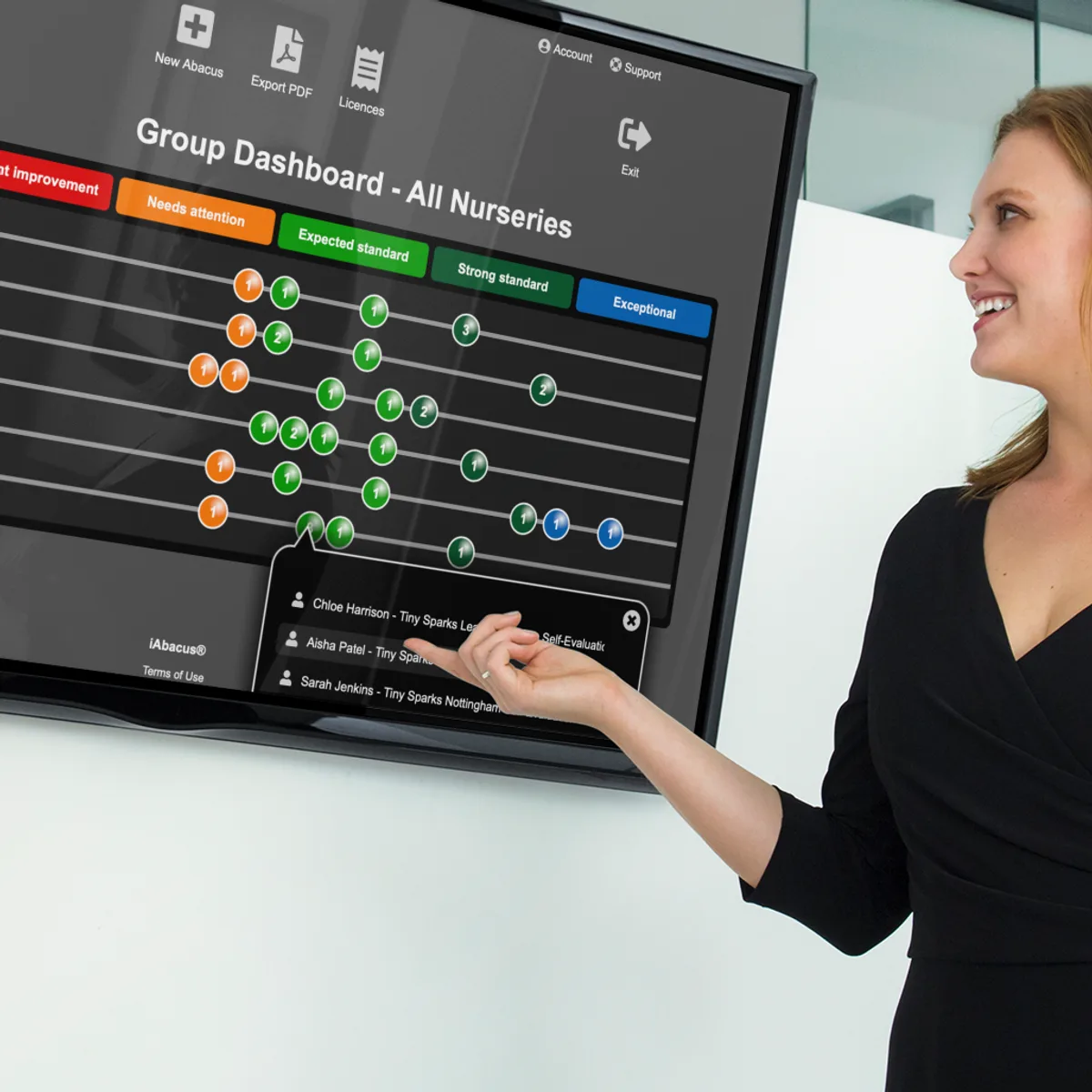
Every setting's self-evaluation rolls up into one live view — showing which nurseries are excelling, which need extra support, and what each one is already doing about it.
The Problem
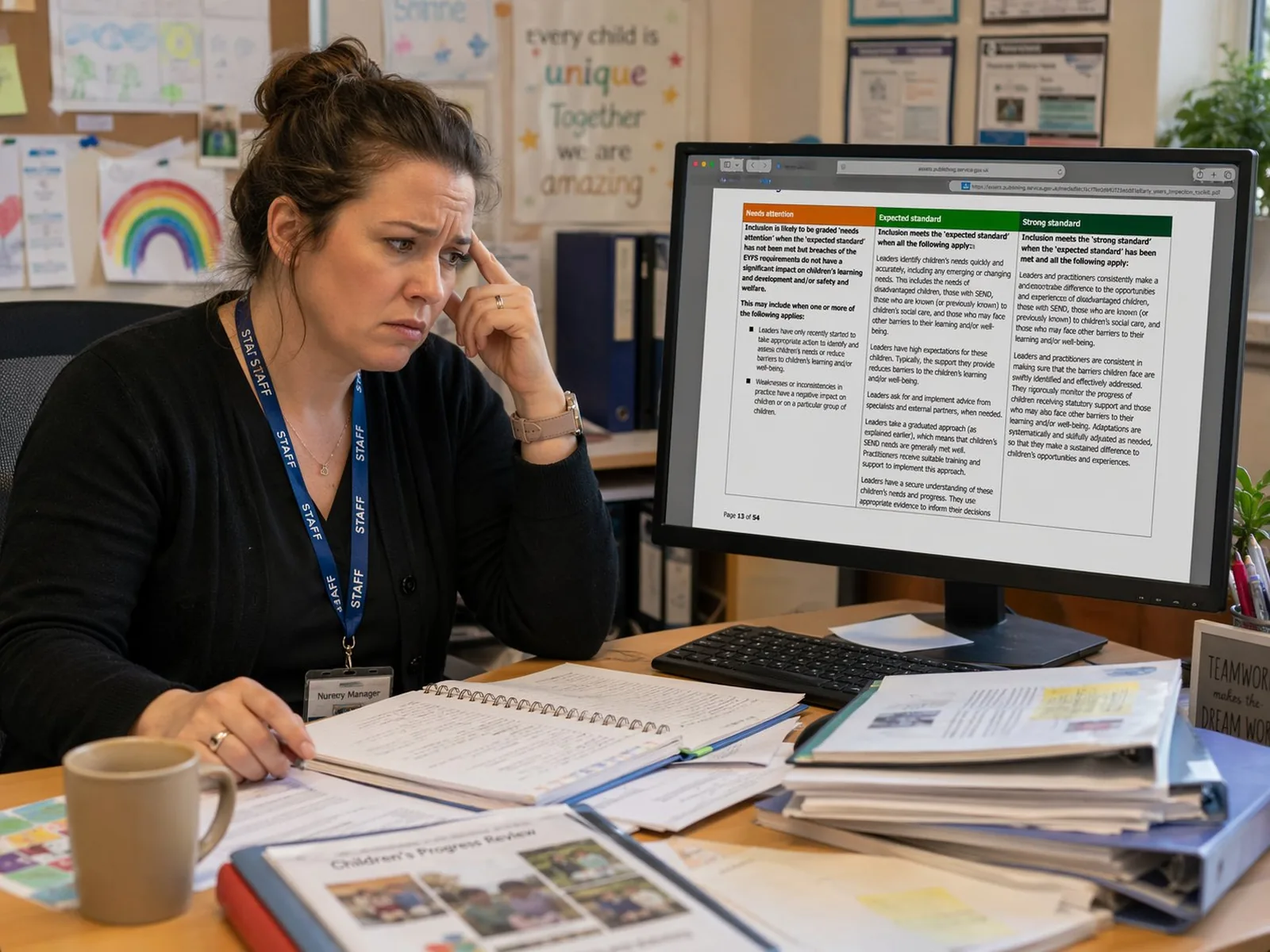
In most settings, self-evaluation gets written, filed, and forgotten. Improvement plans live in different formats and varying degrees of rigour. Nobody is doing this badly on purpose — they're just busy running a setting.
In most groups, the result is a picture that doesn't quite add up. Different settings, different approaches, different language. You can't compare what isn't comparable. Blind spots stay invisible until they become problems.
And this is only the Ofsted picture. Occupancy, reviews, funded hours viability — the commercial picture lives in spreadsheets, email threads, and the head of an area manager who has been meaning to write it up. Two pictures. Both partial. Neither connected.
The Solution
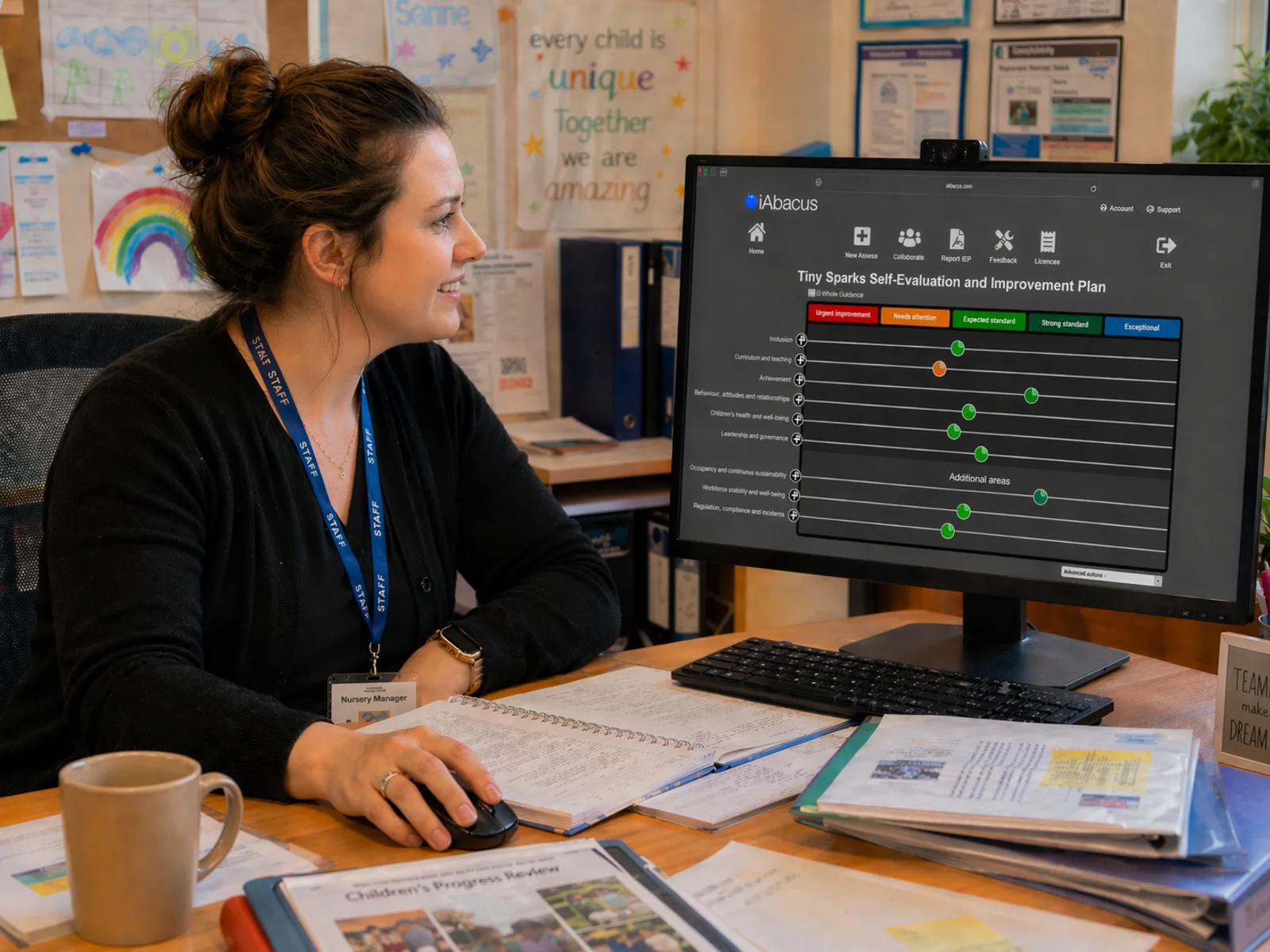
In every setting, the evaluation finally gets done properly. A structured, supported process. Aligned to the new Ofsted Early Years Toolkit. Useful for the leadership team, not another compliance exercise. So leaders actually engage with it — for themselves, not for head office.
In every group, the dashboard builds itself from that work. Every setting on the same framework. Every judgement backed by evidence. One live, panoramic view where comparisons mean something and blind spots become visible long before they become urgent.
And the commercial picture sits right alongside it. Occupancy, workforce, reputation — whatever your group watches, measured on the same scale, built from the same process. Two pictures. One framework. Finally connected.
Every setting on the same framework — comparisons finally mean something.
The dashboard builds itself — no chasing, no compiling, no reports written upwards.
Every evaluation built on honest insight — not numbers performed for head office.
Settings are always inspection ready — aligned to the new Ofsted Early Years Toolkit.
Every judgement backed by evidence, analysis, and a specific action plan.
Leaders engage willingly — because it works for them, not just the group.
Spot excellence across your group and replicate it where it's needed most.
Identify where a setting needs support — long before it becomes urgent.
Your framework, your criteria — Ofsted quality plus whatever your group watches.
It scales — from two settings to two hundred, the value never changes.
How It Works
Stage 1
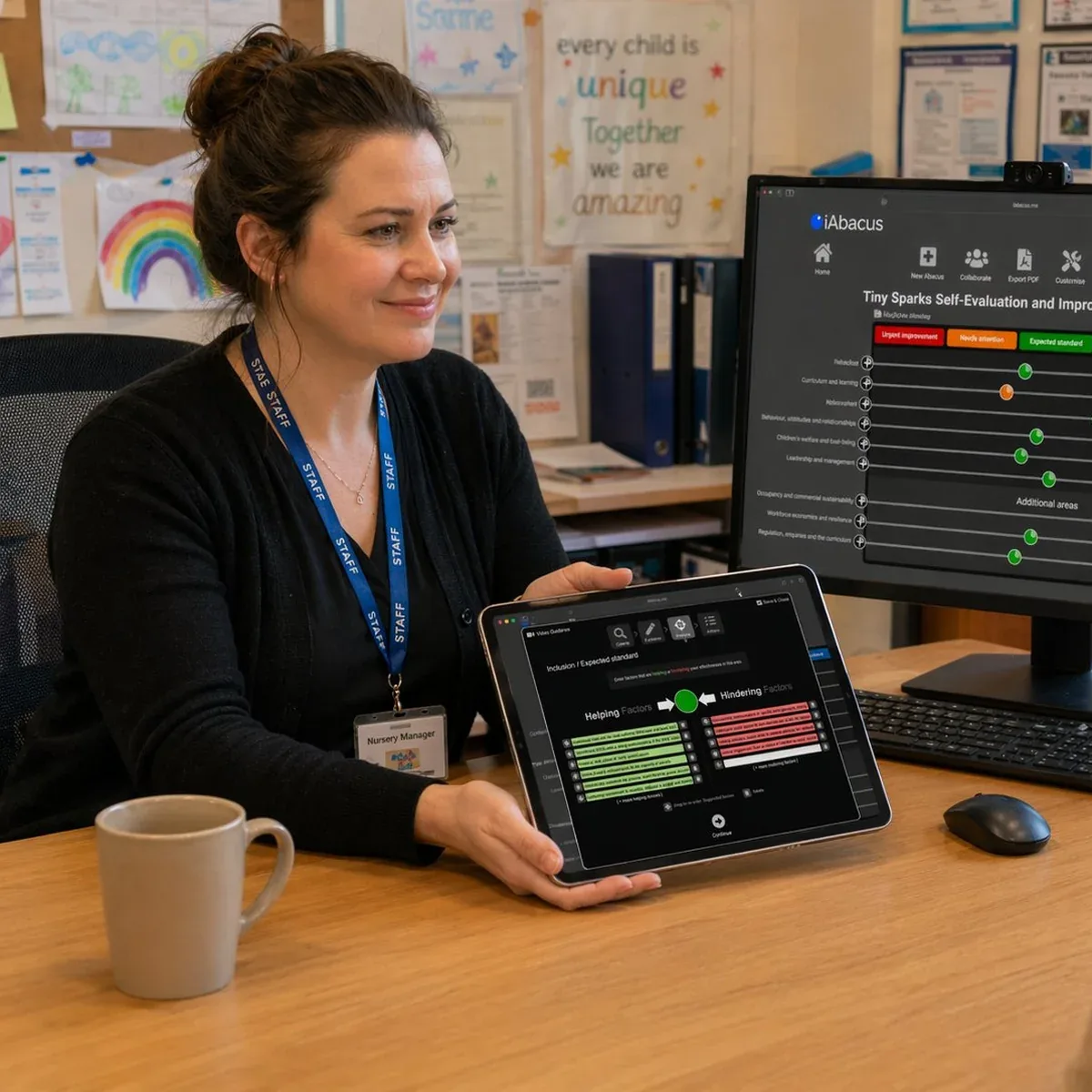
Each leadership team evaluates their setting against the Ofsted Early Years Toolkit and any further areas your group has chosen to include — making honest judgements, gathering evidence, identifying what is helping and hindering, and building a focused improvement plan. (The five steps a manager works through for every area are shown in detail below.)
What the setting manager gets
A structured, supported process to evaluate their nursery and build a genuine improvement plan — replacing scattered self-evaluations with something they actually want to engage with.
Stage 2
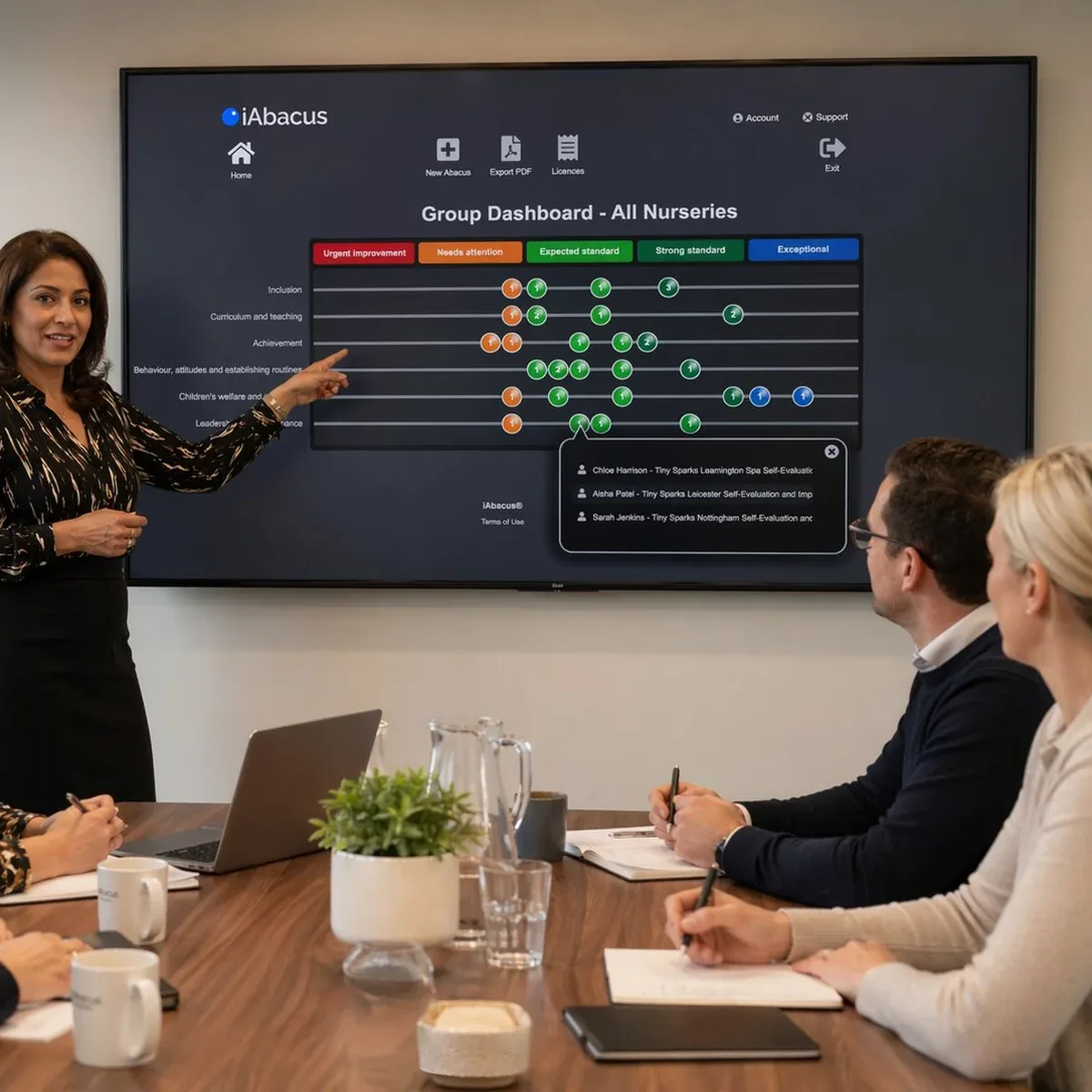
As each setting completes its evaluation, those individual assessments combine automatically into your group-wide Nursery Group Dashboard. No chasing. No compiling. No extra work from anyone. Click into any setting in any evaluation area and you see the full picture behind it — the evidence, the analysis, and the action plan. Not just where every setting stands, but why, and what is being done about it.
What the group leader gets
A live, panoramic dashboard combining every setting's evaluation automatically — no chasing, no compiling, no extra work from anyone. Ofsted quality alongside the commercial and operational priorities your group runs on.
It starts by sliding a bead to where the manager believes the setting is — then four steps test that judgement. It's theirs — evaluating honestly for themselves, not performing for head office. Every judgement starts with the manager's own view, then gets tested against Ofsted's own criteria. And every evaluation ends with a specific action plan — which means the work is never wasted.
Start here
The manager looks at one evaluation area and slides the bead to where they honestly believe their setting sits. Not against a target. Not for an audience. Just an honest first position on the five-point scale.
Step 1
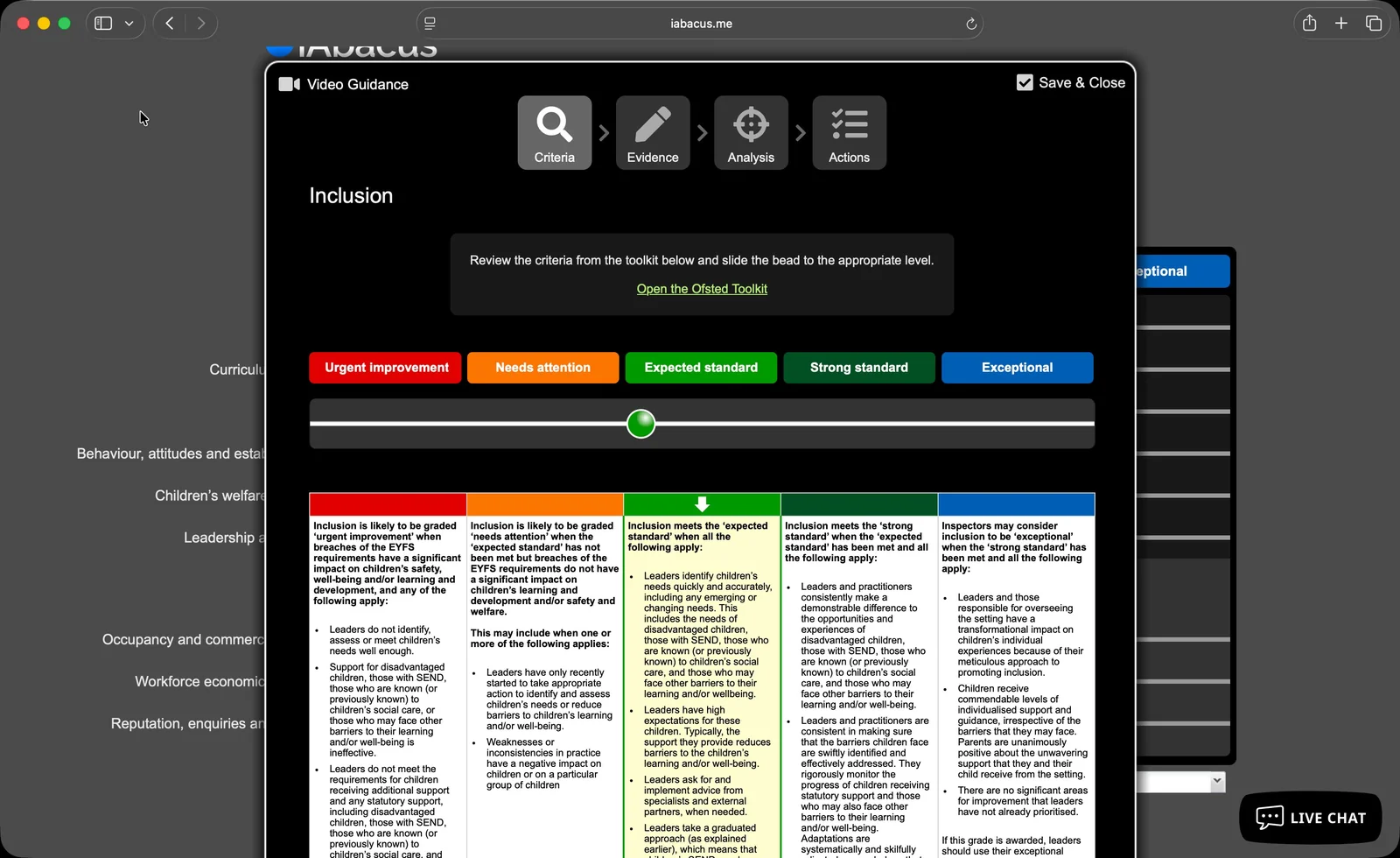
Now the manager opens the grade descriptors — taken directly from the Ofsted Early Years Inspection Toolkit for the Ofsted areas, or from your group's own criteria for everything else. They review the language against their judgement, and move the bead if they need to. This is where the honest view meets the formal standard.
Step 2
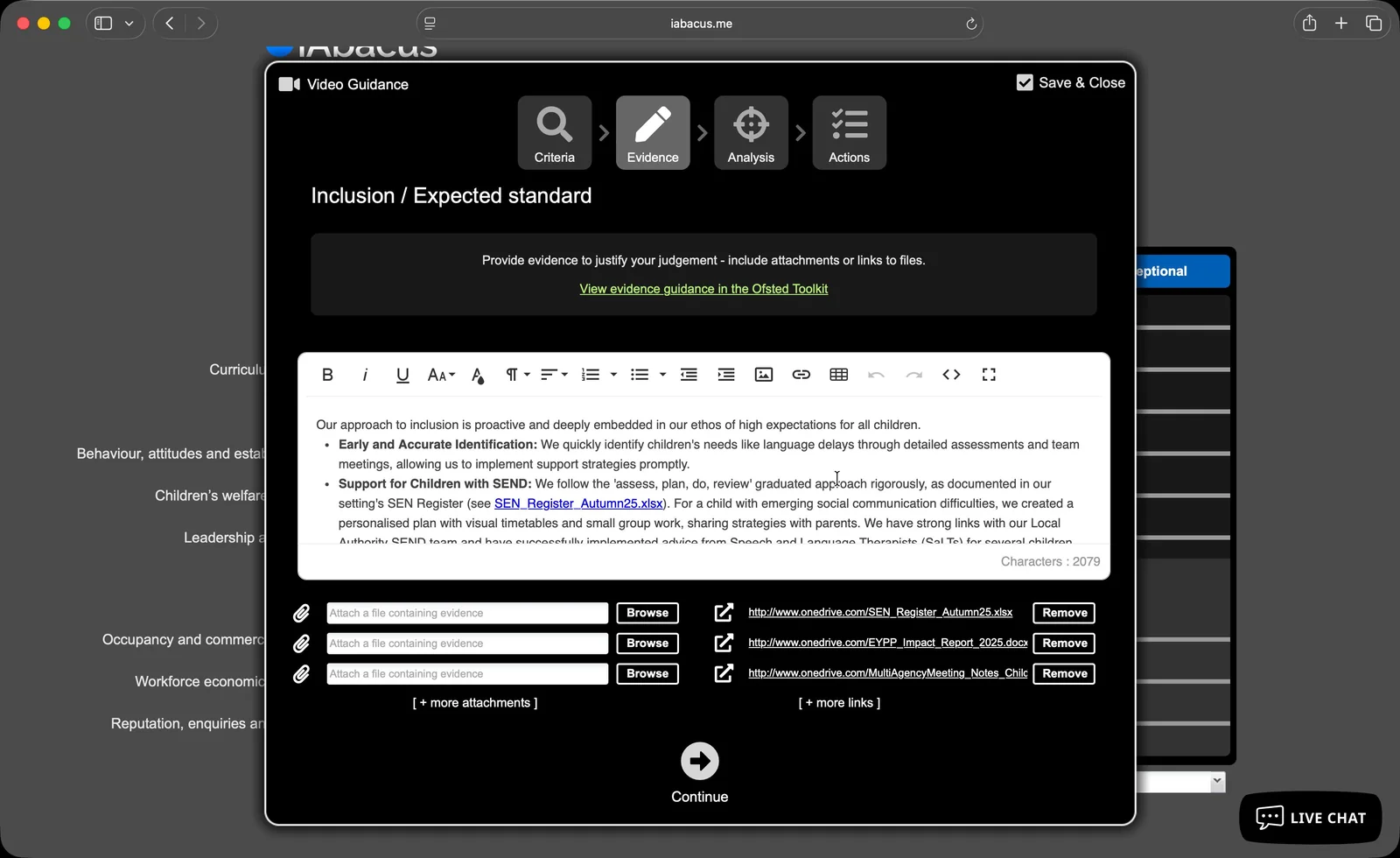
The manager justifies their position with real evidence — written commentary, attached documents, links to files. Anything that supports the position they have taken. When a group leader later clicks into this setting, this is what they see: the honest story behind the number.
Step 3
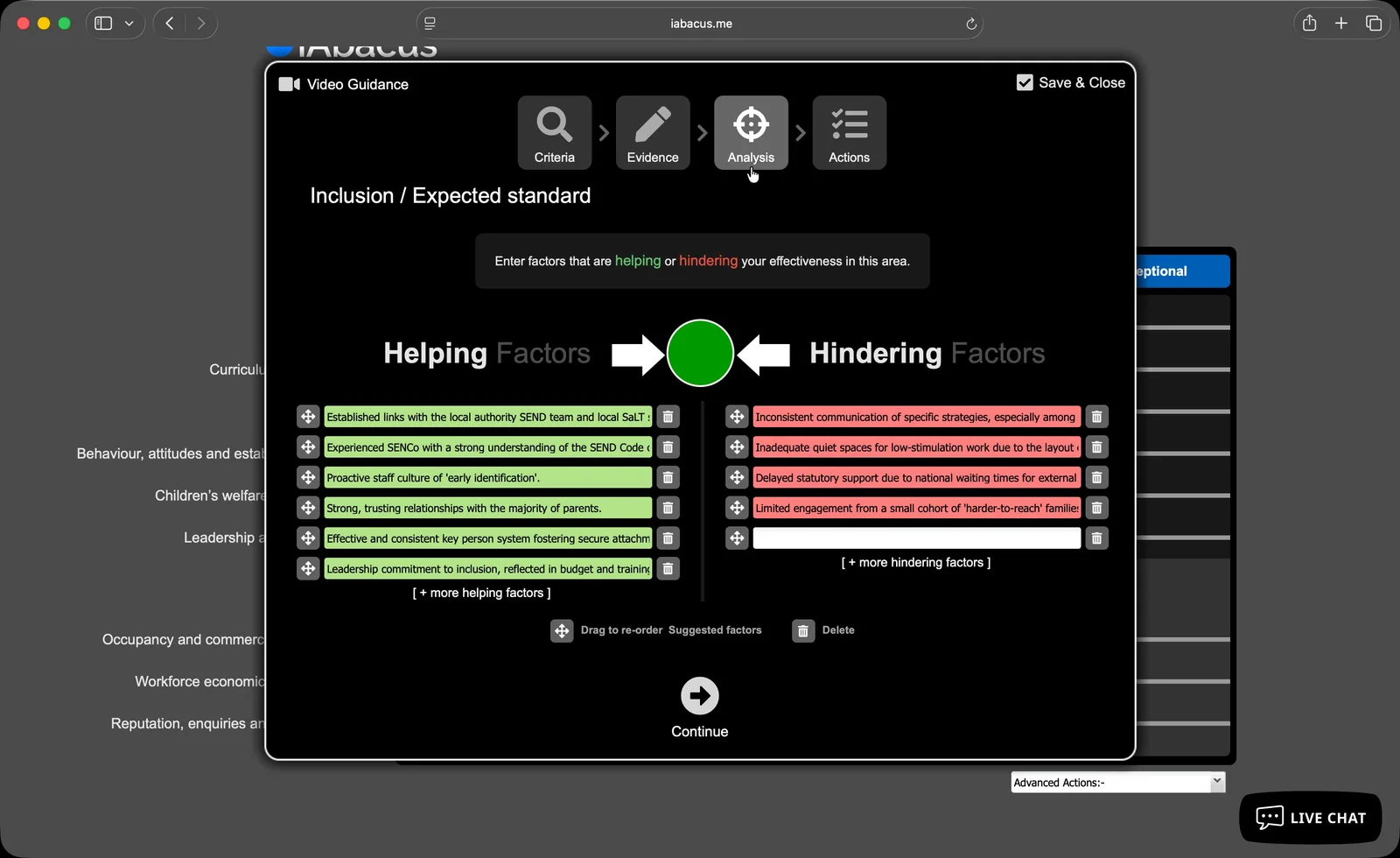
The manager identifies what is helping the setting perform at this level, and what is hindering it from going further. Green on the left. Red on the right. The bead sits between them, held in place by the balance. This is the step no data dashboard can replicate — professional judgement about what is actually going on.
Step 4
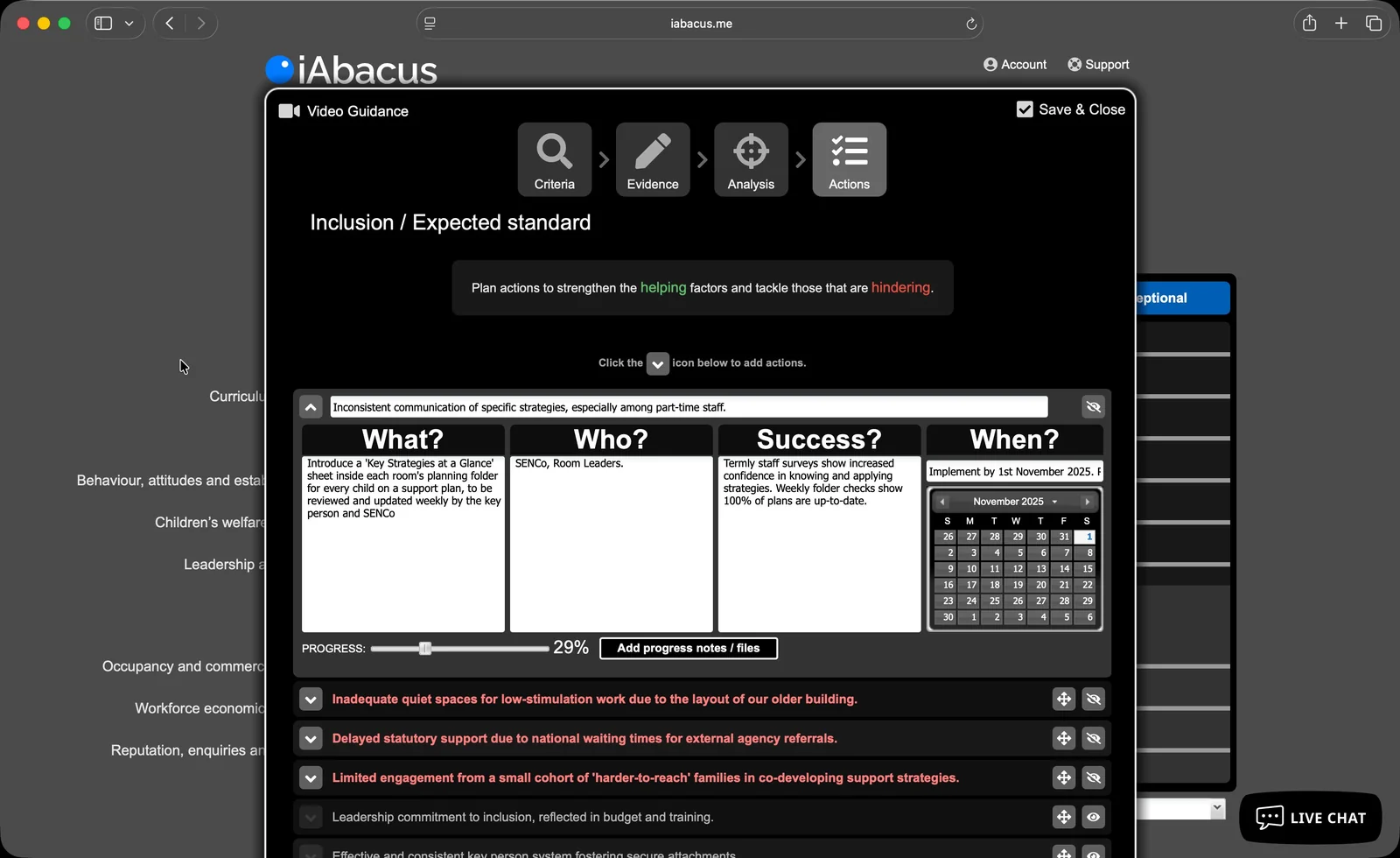
Every hindering factor becomes a specific action. What will be done. Who will do it. What success will look like. When it will be delivered. Progress tracked. The self-evaluation is not a document that gets written and filed. It is a live improvement plan that updates as the setting progresses.
Go deeper
Just under ten minutes inside a single setting's abacus — sliding beads against the Ofsted Early Years Toolkit, signposting evidence, working through the helping and hindering factors, and building the action plan. It ends with the PDF export a manager can take straight into an inspector planning call.
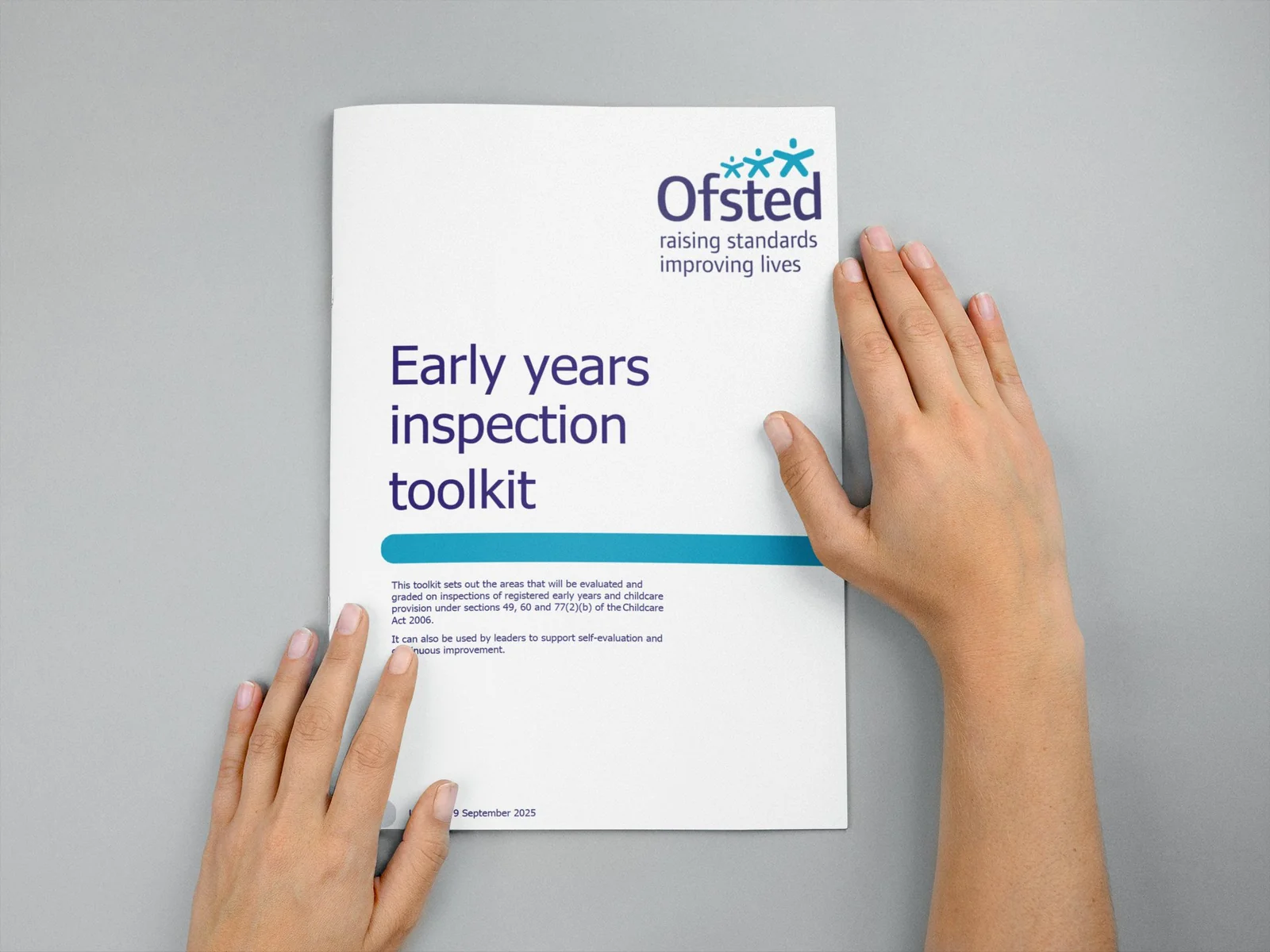
Ofsted's new Early Years Toolkit was designed for more than inspection. As Ofsted themselves say:
"It can also be used by leaders to support self-evaluation and continuous improvement."
That is precisely what iAbacus does — built on the same toolkit, the same areas, the same scale, the same language. So when your settings evaluate using iAbacus, they are working against the exact criteria an inspector will use.
Ofsted evaluates how well a setting cares for and educates children. Running a nursery group means watching a second set of things — occupancy, workforce, reputation, and whatever else your group decides matters. iAbacus lets your group bring its own criteria, alongside the Ofsted areas, evaluated by the same managers using the same process.
The result is a single, live picture of every setting in your group — the quality of the provision that Ofsted inspects, and whatever else your group has chosen to watch.
What's Included
The Nursery Group Dashboard is not software you purchase and figure out. It is a solution we deliver with you. Every setting gets everything they need to evaluate honestly, plan strategically, and improve with confidence. Your group gets the dashboard that builds from that work.
"At strategic board level we use it to look at strengths and weaknesses across all our settings."
"The most straightforward and simple improvement tool I have come across in the last 10 years."
"Because it's not complicated everybody gets it. Not having to explain it makes it easy to share."
"It enabled us to make a judgement about ourselves against the Ofsted criteria, provide evidence for this, and then formulate an action plan to move forward in each of the key areas."
"It's a blessed relief from wading through pages of Word document plans."
"It was a revelation! Lo and behold, I only had to look at it to know what it is all about."
We are confident that once a manager in your group has been through the process and your central team has seen the dashboard, the decision will make itself.
Any nursery group can trial the complete Nursery Group Dashboard solution in one setting at no cost. The full solution — onboarding, support, access to iAbacus, and your live group dashboard from day one. Not a limited version. Not a self-guided walkthrough.
There is no obligation, no contract, and no catch.
Whether you lead two settings or two hundred, the Nursery Group Dashboard works for your group. Smaller groups benefit from an immediately coherent picture across their settings. Larger groups benefit from the economy of scale — and from the consistency that comes with every setting evaluating against the same framework.
Pricing is tailored to your group — based on the number of settings, the length of subscription, and how you want to roll it out. We offer multi-setting and multi-year discounts, and we are always happy to discuss what works best for your context.
Get in touch and we will put together a quote that is right for your group.
Or simply call us on 0115 929 3419. We are real people who understand your world, and we would love to talk it through.
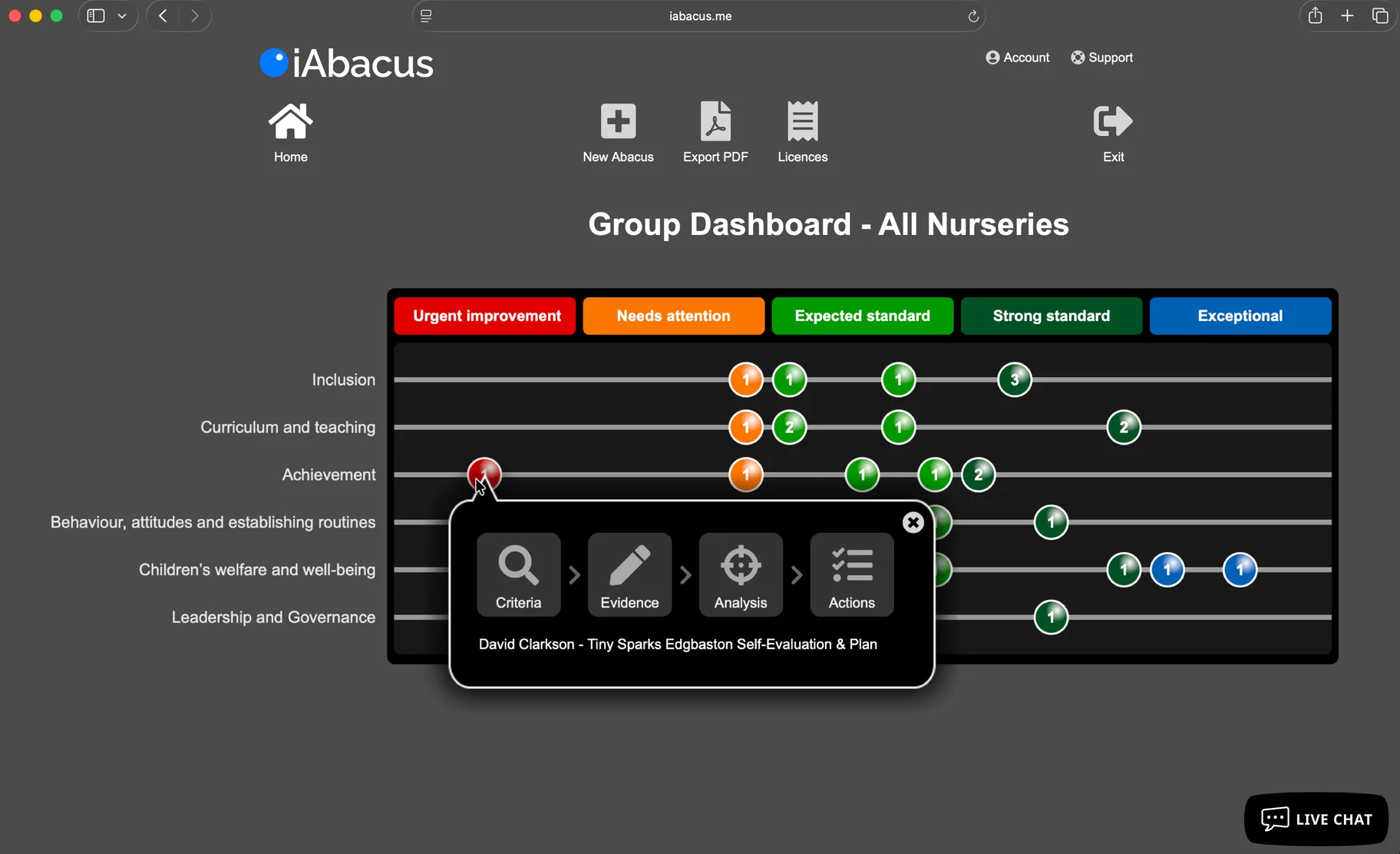
Watch the dashboard track both the provision Ofsted inspects and the commercial measures your group runs on — in a single, live view, using the same framework.
In the top half of the dashboard, the setting is evaluated against all six Ofsted Early Years areas. Below the divider sit three commercial areas the group has added: occupancy, workforce, and reputation. Opening any of them reveals the same five-point scale and grade descriptors — just written for the commercial picture instead of the provision.
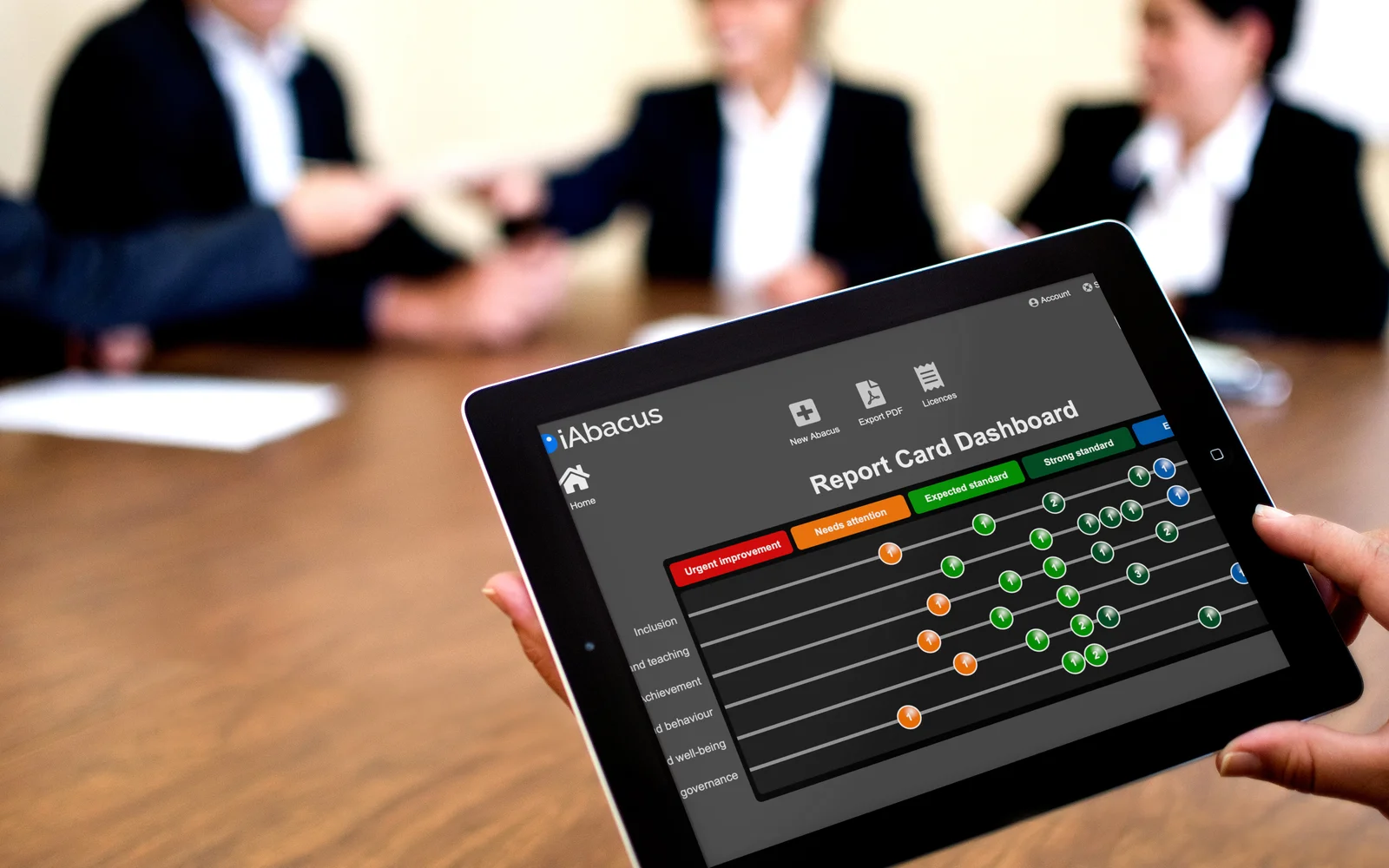
Ask most group leaders how their settings are doing and they will give you a confident answer. But ask them to describe it with precision and evidence…
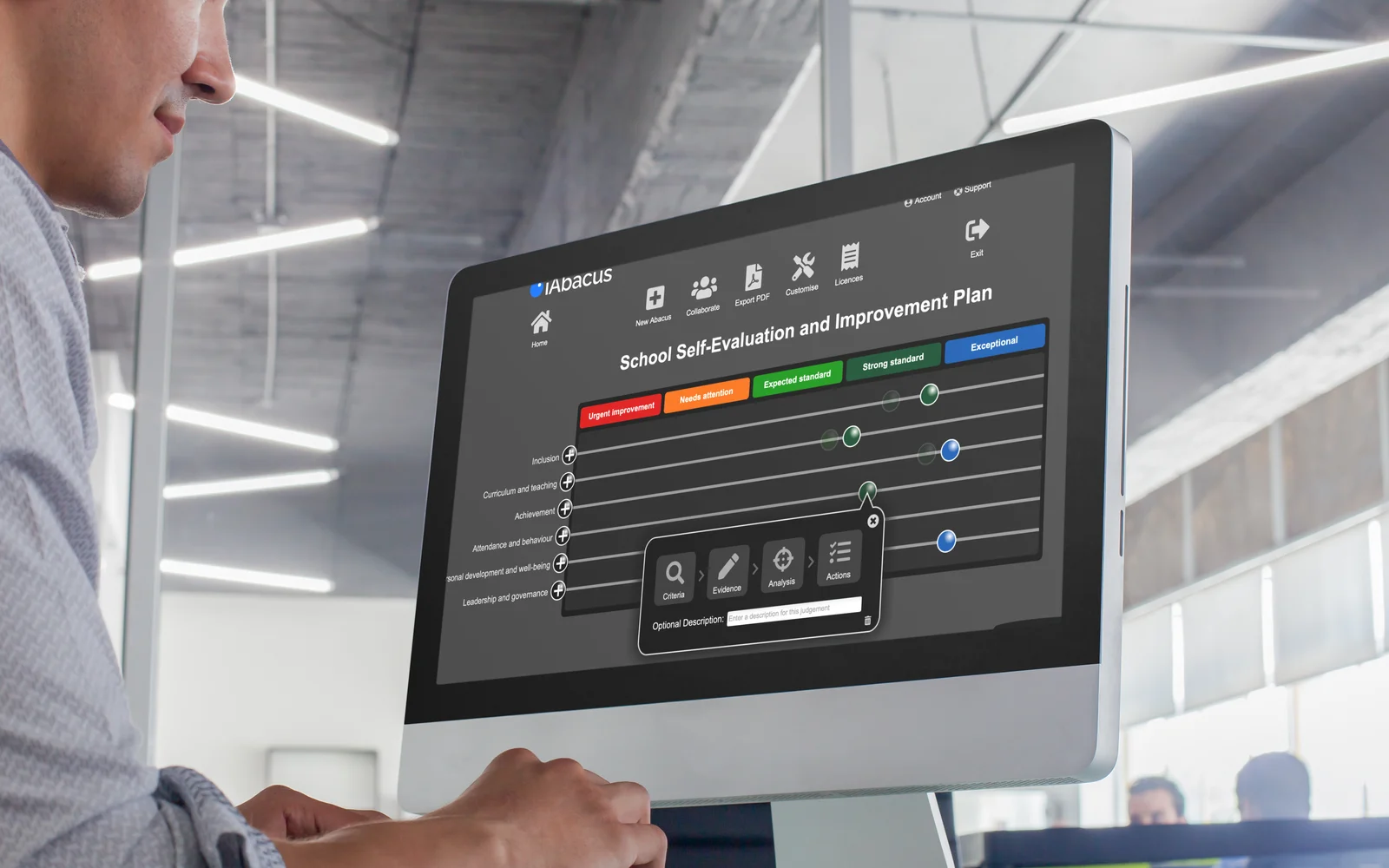
If your group has asked you to use iAbacus, you may have had a familiar thought. Here we go. Another system. Another thing to fill in for someone else…
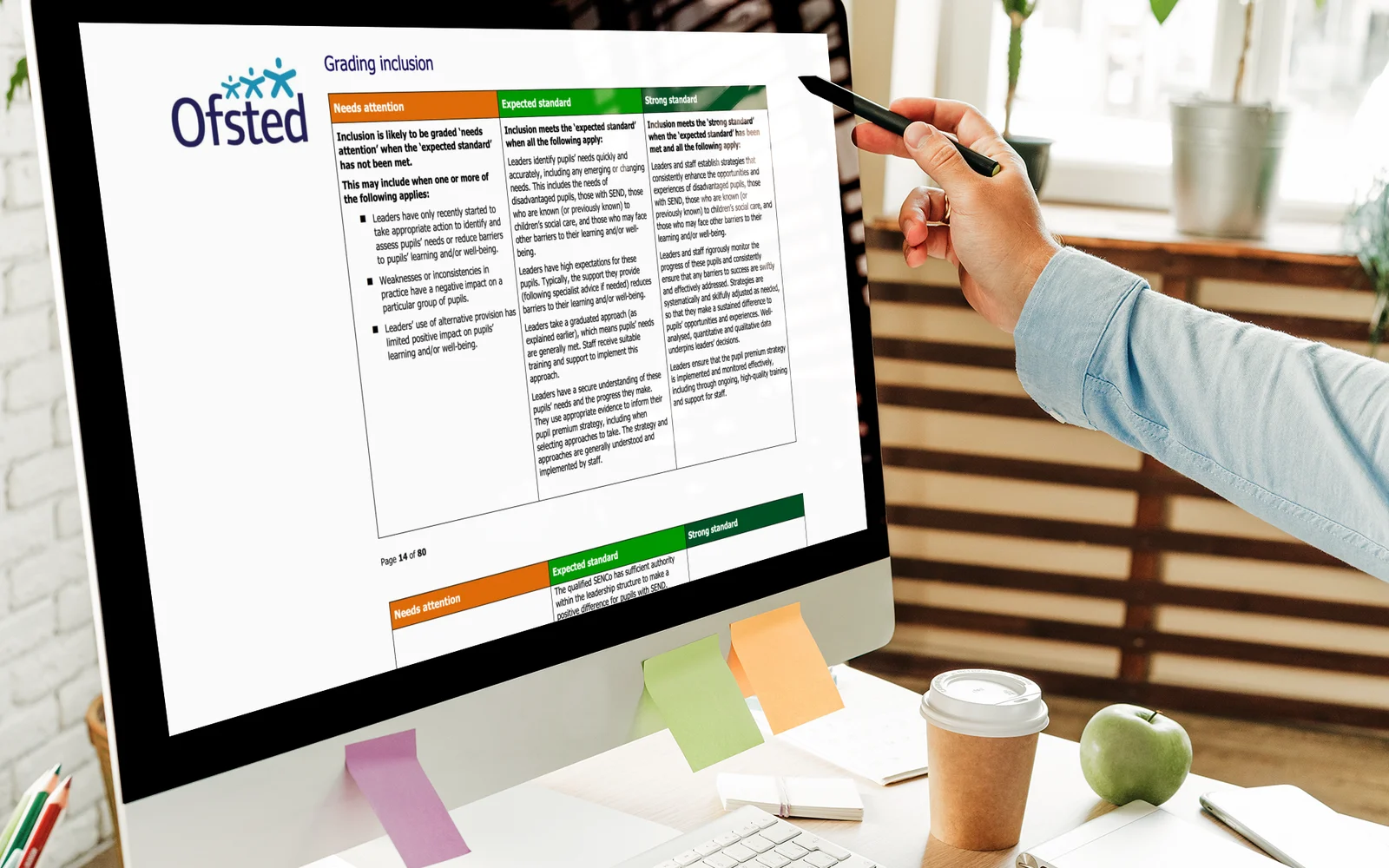
Most of the conversation about the new Ofsted framework has focused on what it demands. But for group leaders, there is another way to look at it…
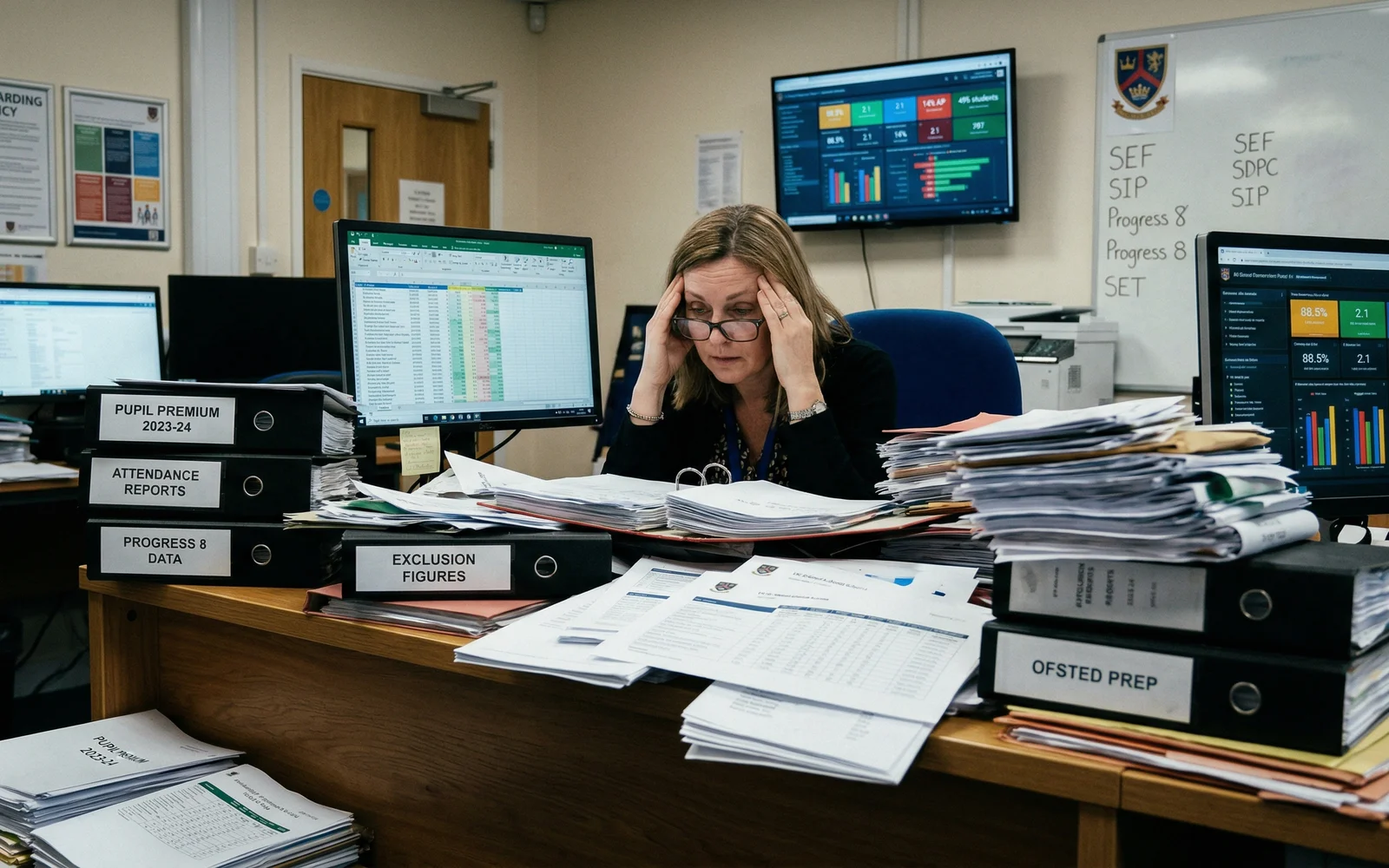
When most people hear the word dashboard, they think of data. Occupancy, ratios, tracker scores. The iAbacus Nursery Group Dashboard is not that…

Ofsted's toolkit covers the provision. It does not cover the business around the provision. Three commercial evaluation areas the Nursery Group Dashboard adds — and why a dashboard missing them is missing half the picture…
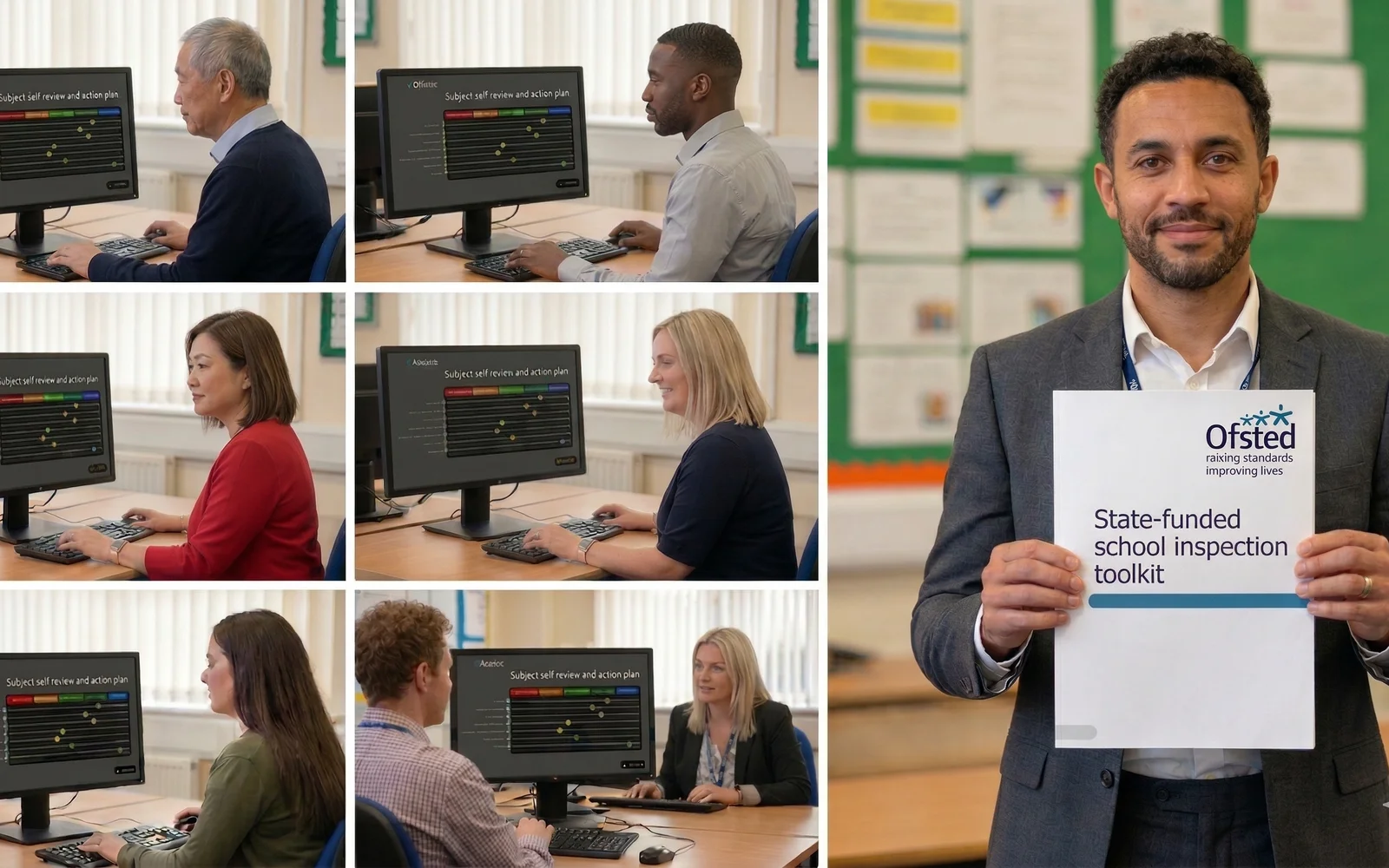
The Nursery Group Dashboard gives group leaders a group-wide view of every setting. But within each setting, what do you know about individual rooms?
About iAbacus
iAbacus is a self-evaluation and improvement-planning platform used by thousands of teams across education, public services, business and the charity sector. The Nursery Group Dashboard is iAbacus tailored for UK nursery groups — pre-loaded with the new Ofsted Early Years Toolkit, extended with the areas your group cares about, and delivered as a complete, supported service.
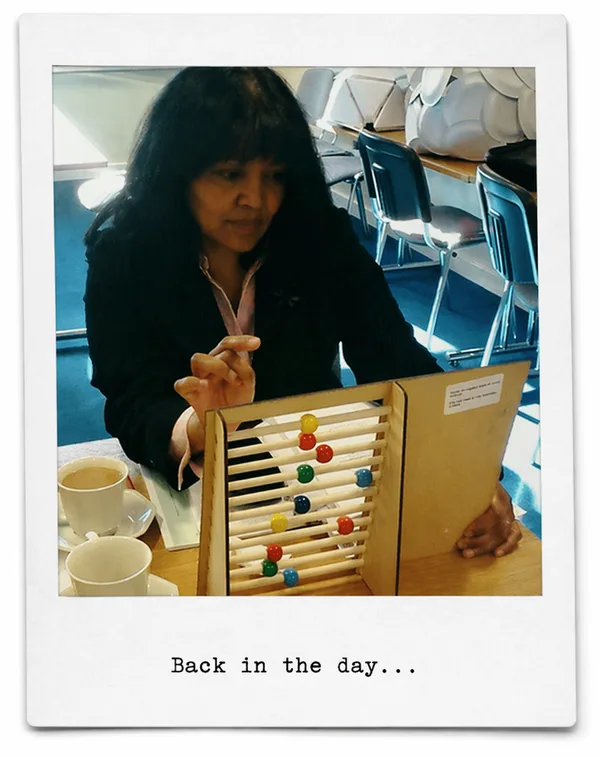
Over fifty years ago, John Pearce — teacher, headteacher, inspector and adviser — started using a simple wooden abacus to help people evaluate themselves and plan how to move on. The method rested on a belief John still holds: people already know where they stand. The job is to draw that out — not drown them in data.
In 2010, John met Daniel O'Brien, who had been designing learning and evaluation software since 1999. Daniel saw that the Abacus method could move online without losing any of its simplicity. iAbacus launched in 2012, was a Bett Awards finalist in 2014, and has been refined by thousands of users every year since.
Every claim we make about the Nursery Group Dashboard is underpinned by the same heritage: five decades of practical experience in leadership and improvement, grounded in published academic research, refined by years of production software.
The framework you are putting your settings on is not new. What is new is that it is now aligned to the Ofsted Early Years Toolkit, extended with the areas your group cares about, and delivered as a live, group-wide dashboard that builds itself.